The life of
a story
My vision for storytelling in a world where journalists are becoming increasingly disconnected from their work.
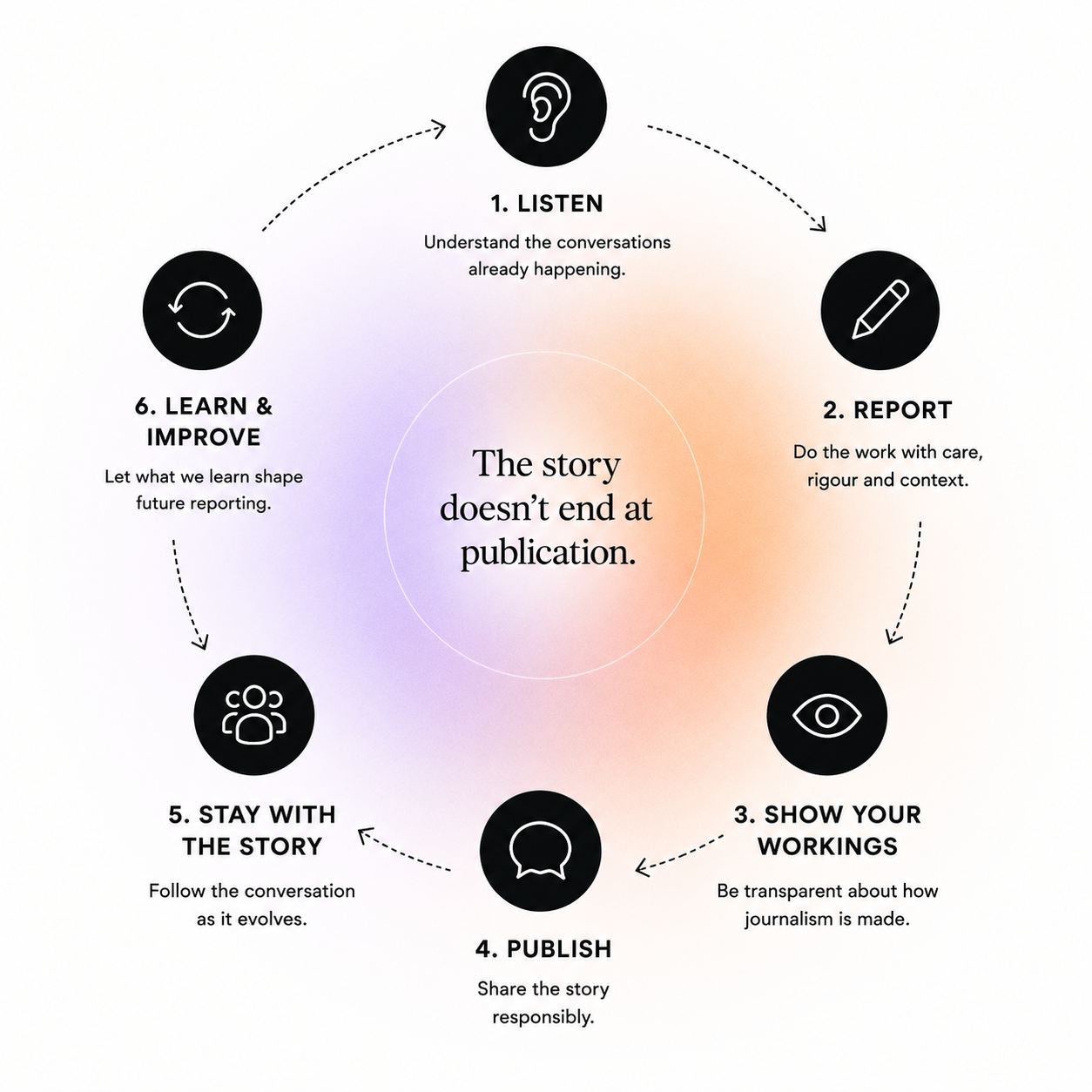
A piece of news should never be considered the end of the conversation. It’s a process that continues long after publication. This is how journalists can rebuild trust and relevance by rebuilding, and rethinking their relationship between reporting and the public.
Distrust and disconnection
Two of the biggest issues in journalism:
In the UK, only 36% of people say they trust most news most of the time, while globally that figure stands at around 40%. At the same time, younger audiences are increasingly discovering news through social media, video platforms and personal networks rather than seeking out news brands directly. Stories now move through a much wider information ecosystem, where they are discussed, challenged and reshaped long after publication.
Yet while much attention has been paid to the relationship between audiences and news, less attention has been given to the relationship journalists have with the communities they serve. Journalism is also becoming an increasingly demanding profession. The Dart Center for Journalism and Trauma reports that up to 59% of journalists experience symptoms of serious stress, while a 2022 Canadian survey found that 69% of media workers reported anxiety and 46% reported depression. These figures matter not only because of their implications for wellbeing, but because constant pressure and emotional fatigue risk creating distance between journalists and the everyday lives, conversations and values that give stories meaning.
If trust is built through relationships, then rebuilding trust may require more than producing better stories. It may require rethinking the relationship between journalists, audiences and the communities that connect them.
How we can rebuild trust and relevance.
Why this matters…
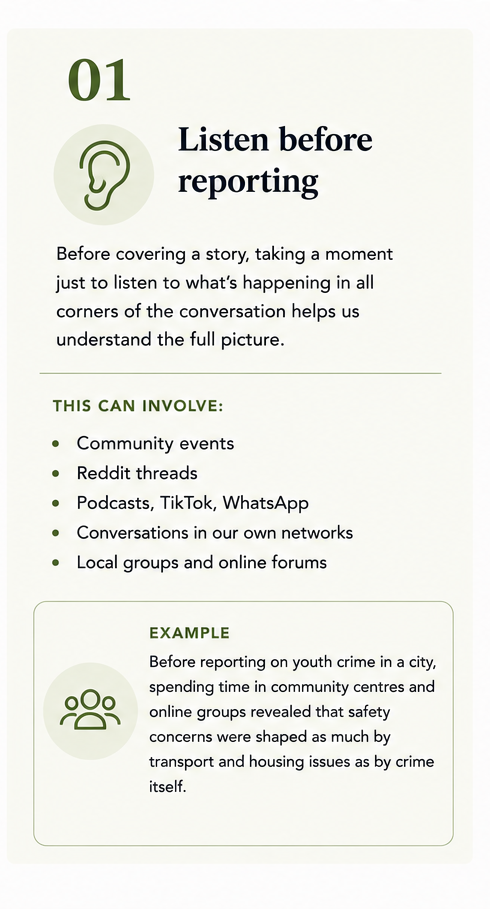
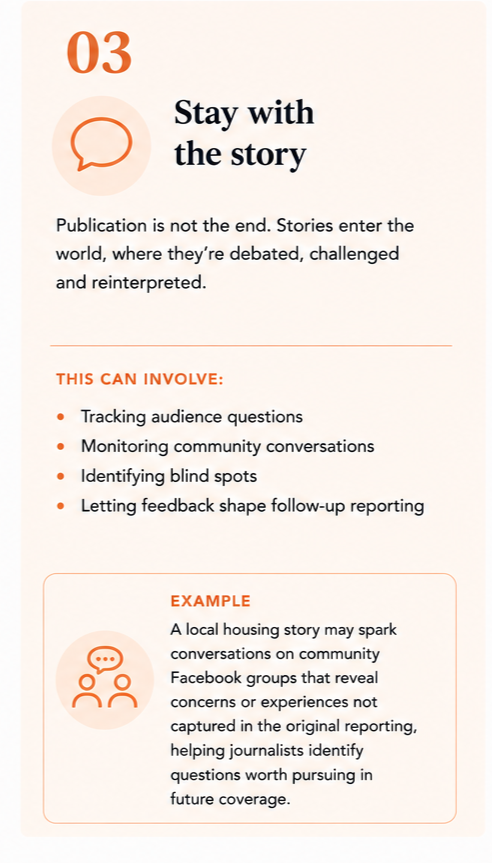
Because treating a story as a living lifecycle, rather than a static product, is the only way to dismantle the modern media trust crisis. For decades, newsrooms could afford to be a one-way lecture, operating behind closed doors and expecting default authority just because of their masthead. Today, that default trust is completely gone, and if we want to connect with disconnected audiences, we have to stop treating publication as the finish line and start seeing it as a launchpad.
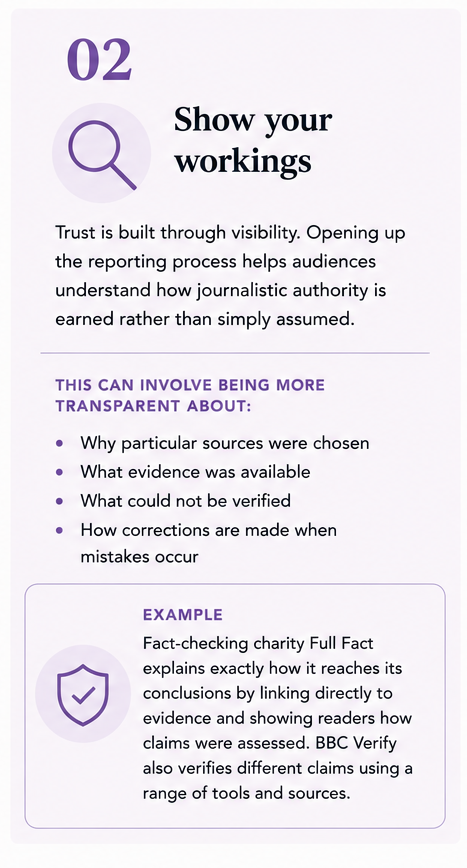
By actively engaging with the broader information ecosystem, establishing procedural transparency and tracking stories into subsequent conversation beyond engagement metrics, we help to shift the editorial paradigm, proving that journalistic authority cannot simply be assumed, but must be continuously and transparently earned.