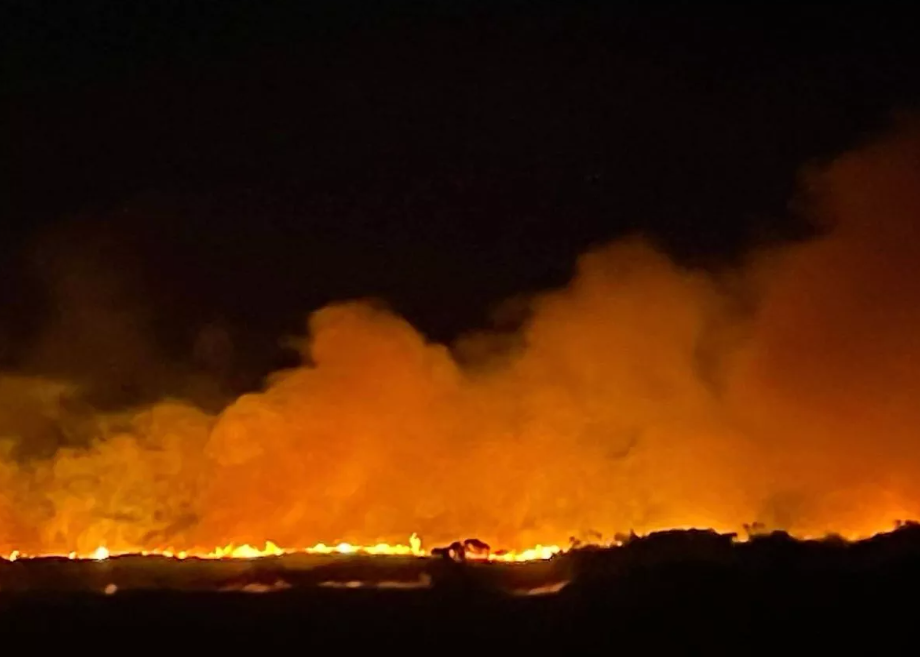
Climate change and arson: The deadly cocktail leaving Wales' hillsides scorched
Image by Mid and West Wales Fire and Rescue Service
First published on 21/08/25
If you’ve noticed a rise in wildfire alerts across South Wales in recent years, whether it has been through social media or news reports - you’re not imagining it. South Wales Fire and Rescue Service says that there has been a clear increase in the number of wildfires over recent years and what we're seeing is not "normal". From January 1 to April 10, 2024, there were 34 wildfires. In the same time period in 2025, there have already been 445 wildfires.
Head of Operations for South Wales Fire Service Matthew Jones said: “A significant large portion of them will be deliberate. While a number of them will be accidental, it will be very small in comparison to deliberate fires we often see.”
Yet this is not the only factor. Wales has also just experienced its fourth driest March on record, following 1944, 1997, and 2011, with just 23.9mm of rainfall across the month, and fire rescue chiefs have also hinted that this may not just be a coincidence.
South Wales Fire Service's wildfire practical advisor, David Bound said: "There probably is a direct link between climate change and the severity of the fires we're attending. But as Matt has alluded, we are pretty confident in the causation of a lot of our fires being deliberate."
When asked what the motive could be for people doing this, he said: “I’m not really sure I have the exact answer to be honest with you.
“Psychological is probably one of them, but it is a generational problem within the areas which we sort of live in south Wales. The demographics tend to lend themselves to generations over time, like when fires are within communities, especially on mountain sides. That, to a certain extent, has gone away. But it is still reminiscent within the south Wales valleys.”
Read this piece here.